
At about 1pm on a lazy Sunday we decided to head to Wimpole Hall. The estate is in the village of Wimpole, just outside of Cambridge, and on the 45-minute journey we drove through sleepy retirement communities, passing signs for whimsical places like Litlington and Bassingbourn-cum-Kneesworth (seriously). As we approached the estate a small sign told us that the Estate was ‘full’, which was slightly concerning. But while it was not, in fact, full it was what I described as bloody busy. We circled the car park a few times to no avail before waiting in the ‘overflow carpark’ (a big field) for a space to become free. It was the first genuinely sunny days of the year which was the impetus for our trip but it also meant that, with the upcoming half-term, the vast grounds were filled with middle-class families complete with long-haired children and Hunter wellies.
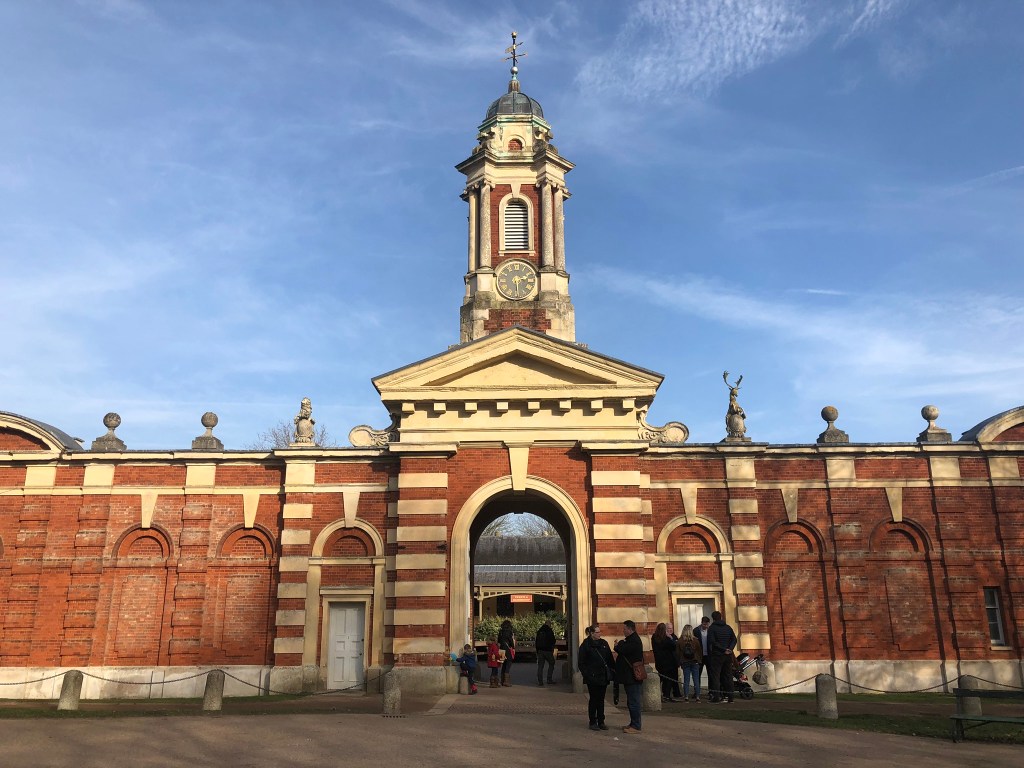
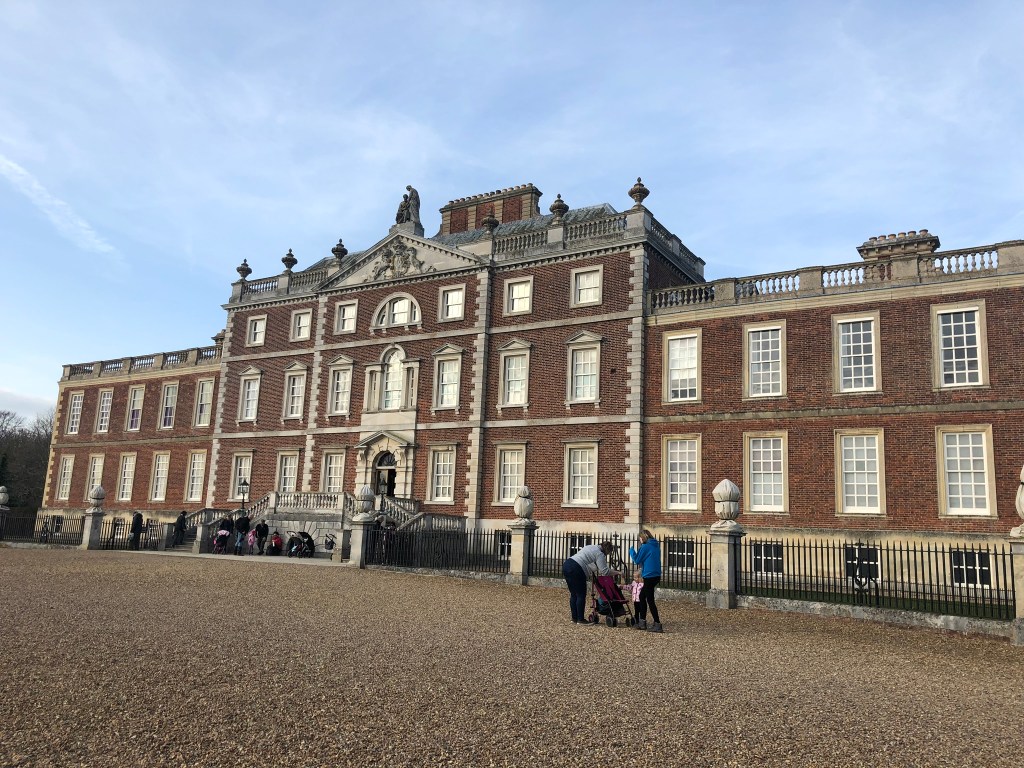
On the way to the hall you pass the old stable block– now a courtyard set inside four walls of bright red brick, the entry way topped with a narrow clock tower, finished with white columns and a flimsy weather vane. Further up the path there is a church, made a bit less welcoming to visitors by its placement behind a row of bushes and black, metal fence. This, too, displays the beautiful red bricks on about four fifths of its exterior, the rest is made up of large beige blocks betraying the combination of old and new structures. “A Frankenchurch” I said out loud, met by an entirely deserved silence on the still air. Finally, after rounding a slight corner, you reach the hall. Again, the red brick is on display, interrupted by dozens of windows which are accented by dirty white borders. But the most striking thing about the hall is its unfaltering, incredibly satisfying, symmetry. Three tall rectangles with ornaments dotted along the roof, flanked either side by a slightly shorter pair of rectangles.
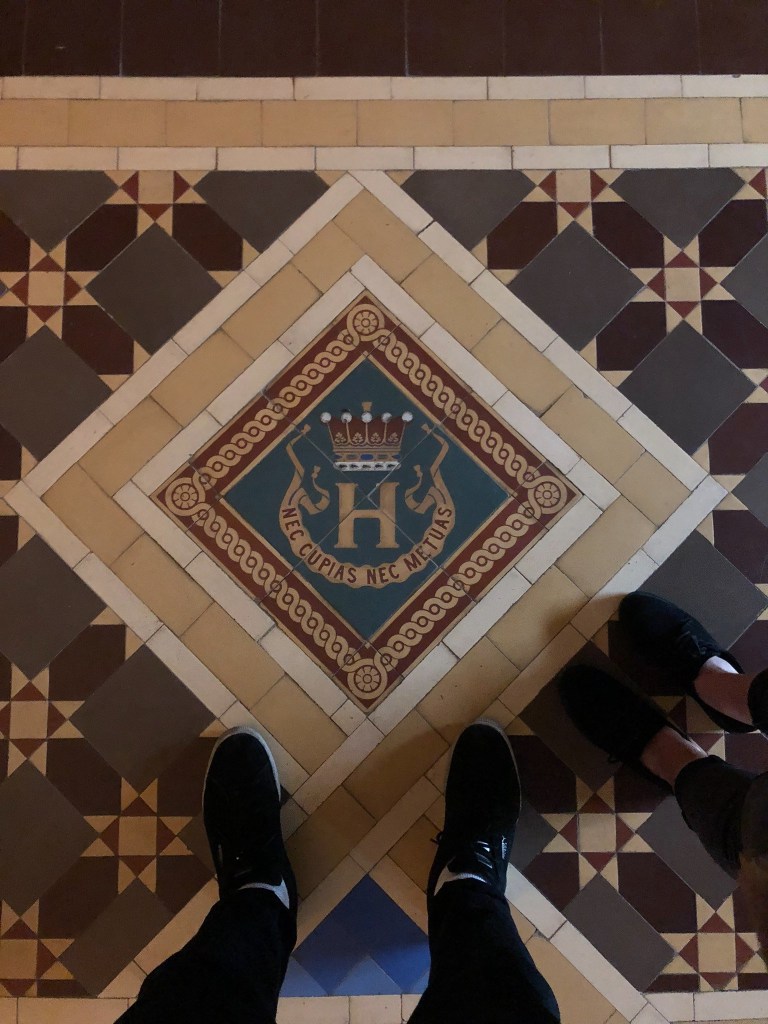
We stopped briefly to take some photos before heading up the gravel path and inside. The first room you step into is pretty ostentatious, with faux marble pillars and Latin quotes, quite literally, set in stone underfoot. ‘Nec Cupias Nec Metuas‘– neither desire nor fear, to want for nothing and to fear nothing as Google reliably informs me. These extravagances, along with bright white busts that sit below murky paintings of a dog and horse, made this room the most typically ‘country estate’ and the least homely. But as you move further into the house a strange combination of antiquated extravagance and the ordinary becomes apparent. The hall was passed from Sirs, to Earls, to Dukes, Lady’s and Viscounts before ending up with Elsie Bambridge, daughter of writer Rudyard Kipling. And until 1976, the year she passed and bestowed the house to the National Trust, Elsie remained.
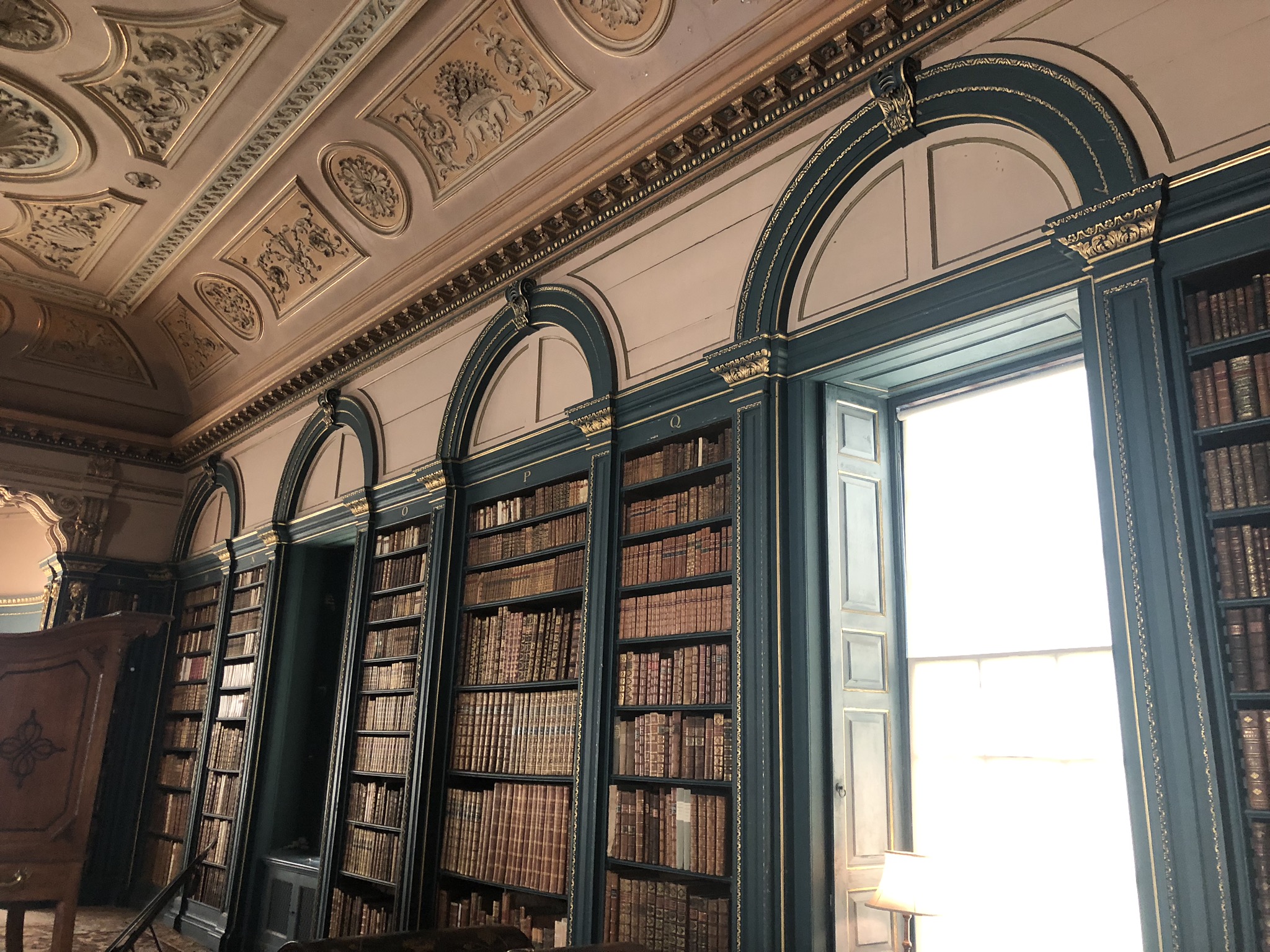
As I mentioned before, the house definitely has its indulgences and excesses. There is a huge bath in which the whole village could probably bathe, a magnificent library with thousands of leather spines on display (which, as a hoarder of books, made me extremely jealous), not to mention a private chapel and a space, the size of some people’s flats, that remained relatively empty because the owners couldn’t decide what to do with it. But as we wandered around the hall, the things that constantly caught my attention were the remnants of an old lady’s life who lived not too long ago, an uncannily familiar world that is just slightly out of reach. In the pantry, for example, was an old Terry’s Milk Chocolate packet that must have been from about 40 years ago which made me imagine Mrs Bambridge indulging in her favourite sweets on a winter evening. Also, despite the seeming grandeur of the paintings hung on the walls, they expressed a sense of humour and humanity. Firstly, if you’re looking for paintings of animals then Wimpole Hall is the place to go– it seemed that every other painting had a majestic horse posed in its foreground or at the very least a dog placed at the feet of its owner. But, one painting in particular stood out as highlighting the levity with which Mrs Bambridge treated her decoration. Lit from below by the painfully yellow glow of a dusty lamp, there hangs the portrait of a cartoonish, young woman cradling a green bottle in her left hand and raising a glass in her right– cork unscrewed on her lap, eyelids heavy and mouth shaped into a playful smile.
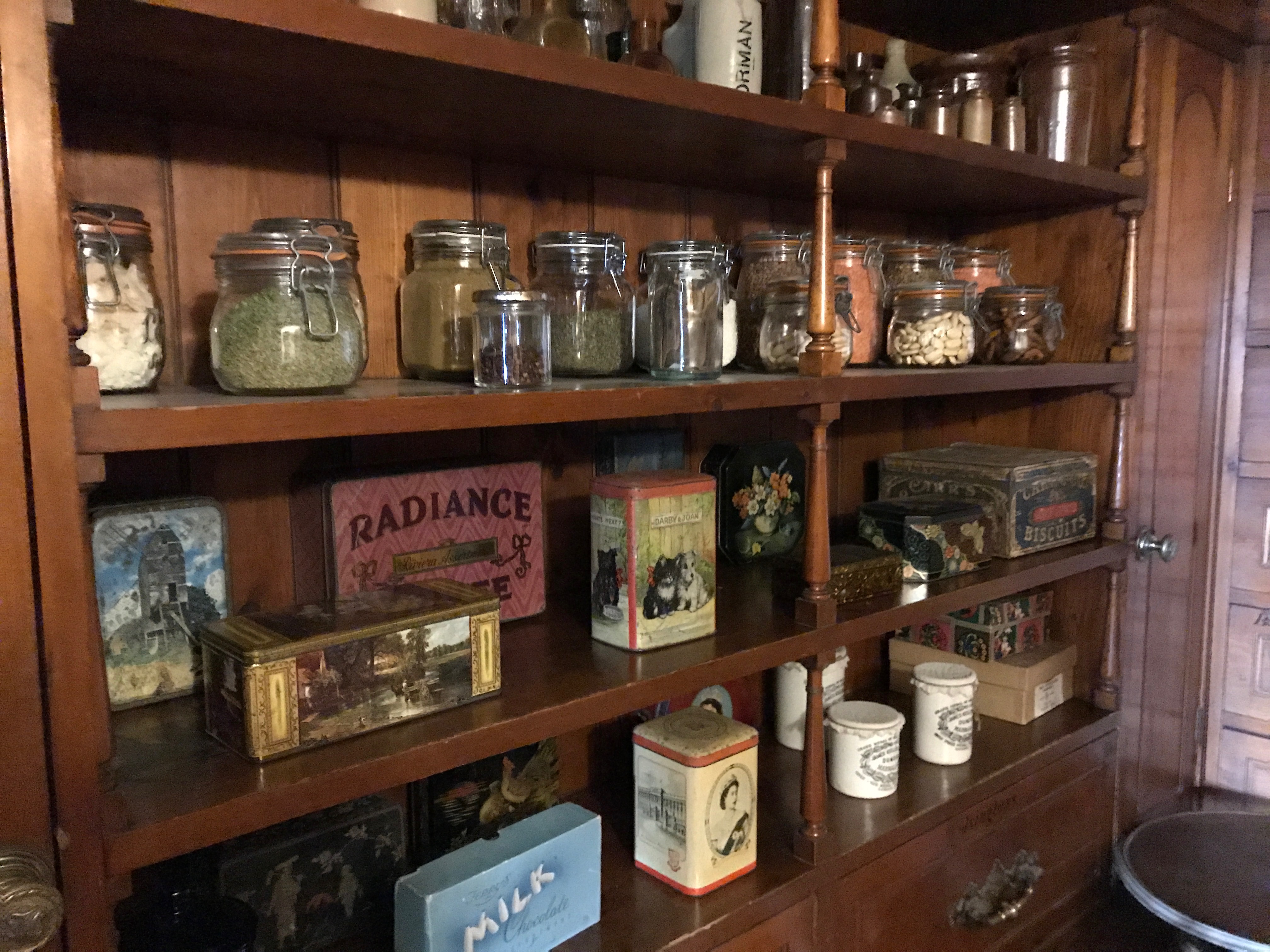

In many cabinets there were these small porcelain figurines– so delicate looking and painstakingly decorated with watery colour– that reminded me of something my grandmother used to own. She had this snowy white figure of a woman, accented with sky blue, and she was holding an umbrella that you could remove (though I don’t think we were supposed to). In fact, the most overwhelming part of the experience was the smell. It smelt like my grandmother’s house. The floors creaked like her floors would creak under the same thin carpet. Jess said the pantry smelt like her grandmother’s kitchen– the musty glow of spices kept for decades, trapped in the old wood. All this made the hall feel familiar, lived in, real and with the fingerprints of a real woman all over it. A man in the basement of the house told us about a radio that still had the old names of stations on it and how he would listen to Radio Luxembourg because that played pop music. Another told us about the hall’s late adoption of electricity, lacking it even when she was a young adult in the 60s. While other historic buildings and sites can feel cold, all this gave Wimpole a distinct vitality. Its story felt tantalisingly close– in reach– as though if you tried hard enough you could step back there and live it, Mrs Bambridge having just popped out for tea.
Lately I find recent history more and more fascinating. Partly nostalgia and sentimentality but also partly, I think, because it is easier to discover and imagine the human aspect in those stories– the minutiae of experience. I heard in a video someone use the term ‘relics of humanity’ to describe the clues of previous owners found within or attached to second-hand purchases they made on eBay and I think that phrase sums up the main reason I felt enamoured by Wimpole Hall. After the long line of aristocratic owners, the hall ended up in the (relatively!) ordinary hands of Elsie Bambridge. And behind her, in a house full of excess, she too left her own relics of humanity, the things that cut through and resonate beyond the conceits of a stately home and remind you that these people existed not in the abstract of a booklets and plaques but in the same world of joy, pain, loss and love that we do. Their voices still seem to ring around the rooms, the beds seem still warm.

 Uncultured Review