National Trust Review
For my birthday a few months ago I was gifted membership to the National Trust for the year and I have decided to try and write a short review or post about anything that struck me during my trip- so here we go.
Although intending to make my first trip as a member as soon as possible, life– of course– got in the way and it wasn’t until this past weekend that I made my inaugural trip. I was going on a weekend away with family in Norfolk and so decided to find the nearest site to where we were staying, which turned out to be Oxburgh Hall. Because it was being chosen on the basis of its proximity to us I read very little about it and booked tickets to a tour highlighted on its page- again taking little notice of the its substance.

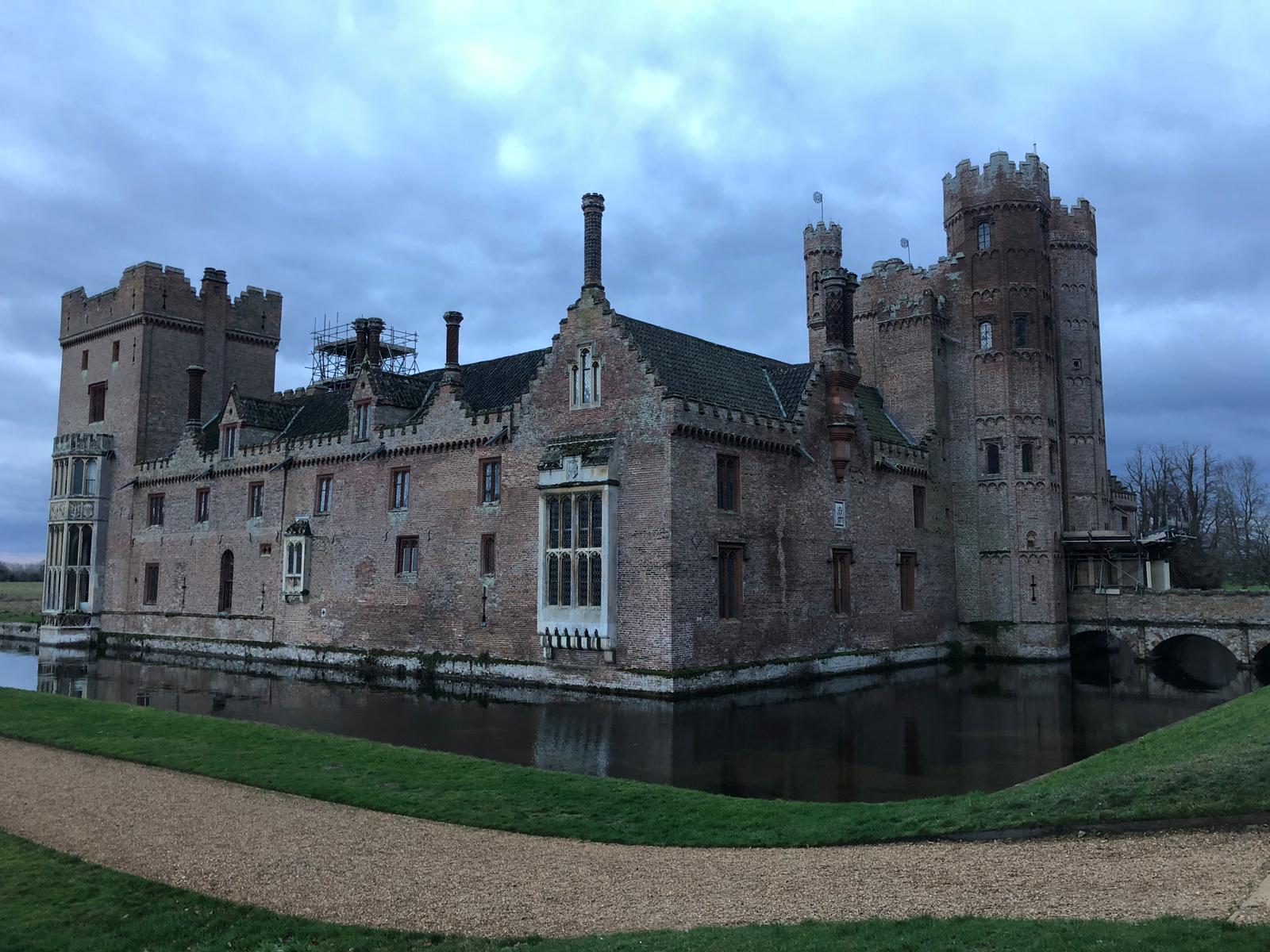
The approach to the hall is inauspicious: the taller sections of grey wall appearing from behind a cluster of trees. It was only as we pulled up on its gravelled carpark that I noticed sections of the house surrounded by scaffolding. Concerning– yes, but other people were walking towards the ticket booth unperturbed so we followed suit. After a few minutes of queuing we approached the small window, set inside an archway of an exterior wall that surrounded the gardens as well as the hall itself.
“So you know the house is closed today?”
It seemed that our lack of planning had backfired on us and the promised tour was never to be taken.
“Oh, but we booked a tour online.”
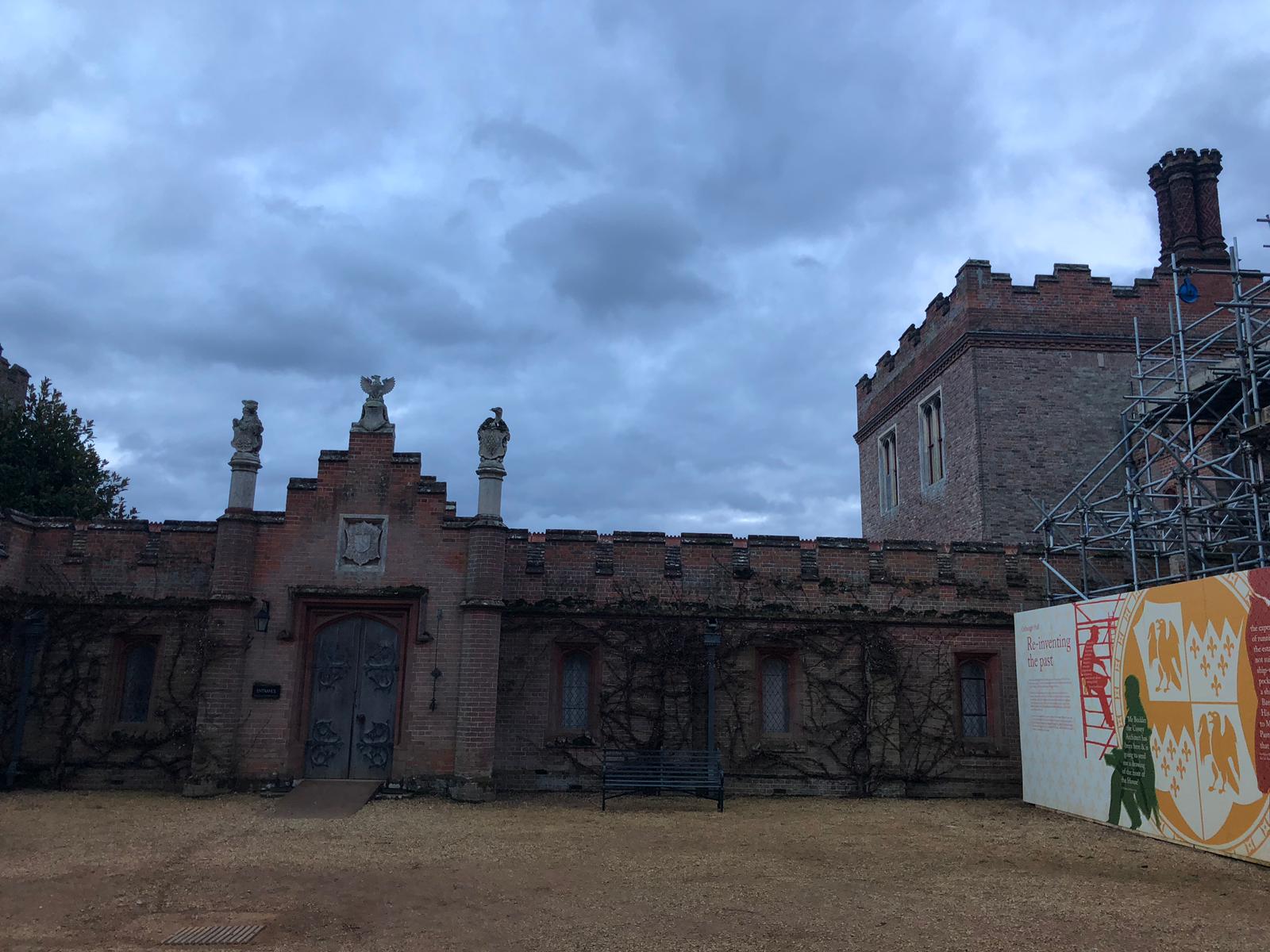
This seemed to be the secret password as we were told to meet in the courtyard just before 2pm. But before we were sent on our way, we were duly told off after our group of eight was reduced to four due to slightly less interested family members dropping out last minute. The house itself is very pretty. It was a grey and rather miserable afternoon but the rectangular building stands stoically against its backdrop. The bricks have this pale, almost pink colour and its angular outline makes it look like a beginner level castle. We walked over the moat encircling the hall and entered the courtyard, in which the full extent of the scaffolding became clearer. The entirety of one side of the house was covered in the metal framework, making it completely inaccessible. , However, before we could speculate further the tour began.
Unfortunately, I have committed the cardinal sin and have forgotten the names of the two brilliant tour guides who showed us around the house (a sin I vow not to repeat) but we were lead by a grey-haired and bearded gentleman who spoke with a kind of rural wisdom, kind of as though he had breathed in his knowledge via the country air. He was joined by a diminutive woman who looked, in her long coat, like a schoolmistress with a softer and more kindly demeanour. They seemed like a Brian and Mary, but that’s probably not true.
It was soon explained that we were, in fact, on the Winter tour in which the majority of the house’s furniture was covered with off-white sheets while then house was being cleaned. I would be lying if I said I wasn’t slightly disappointed but it became clear that the house had a lot more to offer than what was under these sheets. The scaffolding, it turns out, was a scar from an extremely unfortunate event. One of the three dormer windows on top of that wall, having not been integrated properly into the existing brickwork, simply slid off the roof. It had been held in place from over a hundred years with a wooden beam but once it rotted to the point of breaking the window broke free. Upon subsequent inspection of the house, more and more structural inadequacies were discovered and the hall was suddenly facing millions of pounds worth of repair. And this was the state of the house in which we encountered it.
The guides did their best to convey the history of the house in spite of the circumstances. Its creation (in its current form) in 1482 as a house to impress rather than defend. Some tapestries woven by Mary, Queen of Scots and a medieval drawing etched onto bare wall usually hidden behind the wallpaper. While the house’s history is definitely fascinating, the thing I was most struck by was the state of flux in which the house was existing. Many of the features of the house (including the ill-fated dormer windows) were additions during a period of huge renovation by the 6th Baronet in the 19th Century which made the current renovation seem like part of a cycle, an ebb and flow of stasis and change. Similarly, when previous generations sold their personal homes to save Oxburgh Hall from property developers the storage of their belongings rendered some rooms unusable, just as the current renovation had done with the Queen’s Room. Even the story of the current occupant who, present on the night of the accident, was evacuated by the fire brigade made the tale of the house seem alive and continuing.

Although in less than desirable circumstances, I felt as though instead of looking back at a static picture of history I was seeing it being made in front of me. It was a reminder that we aren’t immune to the passing of time and that stories will be told about the things we did– whether we rescued the house or let it fall in to ruin, whether we continue to be curious or let its secrets fade from memory. The modern custodians, too, has a responsibility in the way that the narrative is told, as proven by the discovery that the King’s room is simply a reference to, rather than the site of, Henry VI’s visit to Oxburgh. As the guides drew back the curtain on the day-to-day running of the house and spoke about the struggle to innovate and engage with the public in the face of the repair bill it only highlighted the feeling that the history and continuing vitality of the house can coexist- that it is not only a story to be told but one still being made.
I would recommend the house if not only to support their repairs then also to experience the its flux and change. The staff were knowledgable as well as welcoming and endearing while the house has a subtle beauty and grace.
They also make an incredible hot chocolate.
Jack.

 Uncultured Review